BSO Methodology
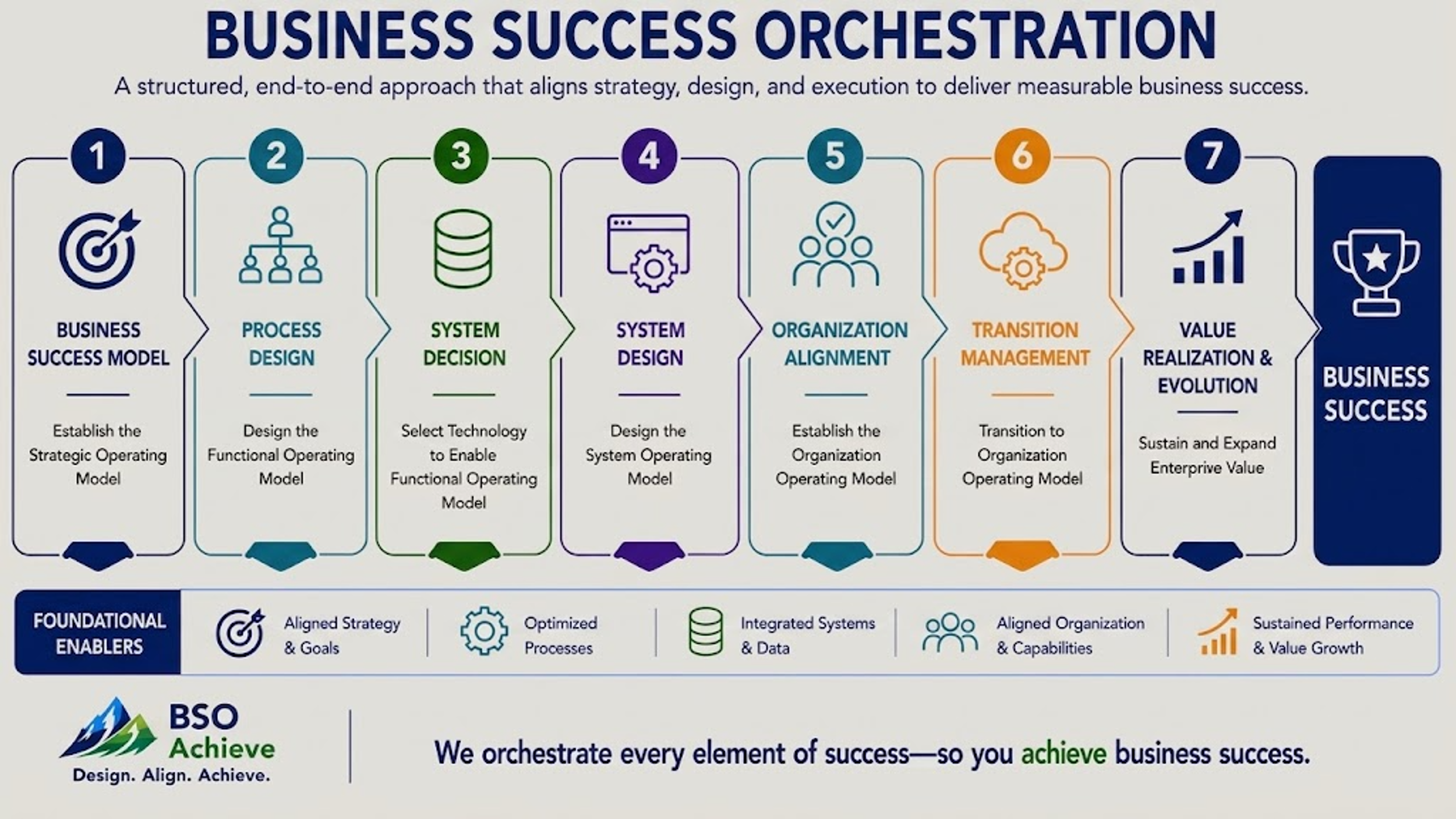
1. Business Success Model
Define what success means.
Validate business goals
Align leadership
Identify required capabilities
Establish operating structure
Deliverable: Strategic Operating Model
3. System Decision
Determine the right technology path.
Fix existing system
Reimplement
Select new platform
Deliverable: System Strategy & Decision
5. Organization Alignment
Ensure results are sustainable.
Organizational alignment
Governance model
Culture and accountability
Deliverable: Organization Operating Model
2. Process Design
Ensure processes deliver value efficiently.
Challenge existing processes
Remove waste and complexity
Align operations to outcomes
Strengthen control processes
Deliverable: Function Operating Model
4. System Design
Align development to business outcomes.
Design based on validated processes
Test-driven configuration
Business-led validation
Deliverable: System Operating Model
6. Transition Management
Plan and manage transition.
Rollout roadmap
Risk assessment
Go-Live readiness assessment
Progress monitoring
Deliverable: Adoption of new Organization Operating Model to deliver business outcomes
7. Value Realization & Evolution
Transformation becomes an ongoing capability.
Adoption: monitor effective use of system
Adaptation: monitor progress toward business goals
Changes to improve progress toward business goals
Deliverable: Progress toward business goals; refinement/ evolution of Organization Operating Model
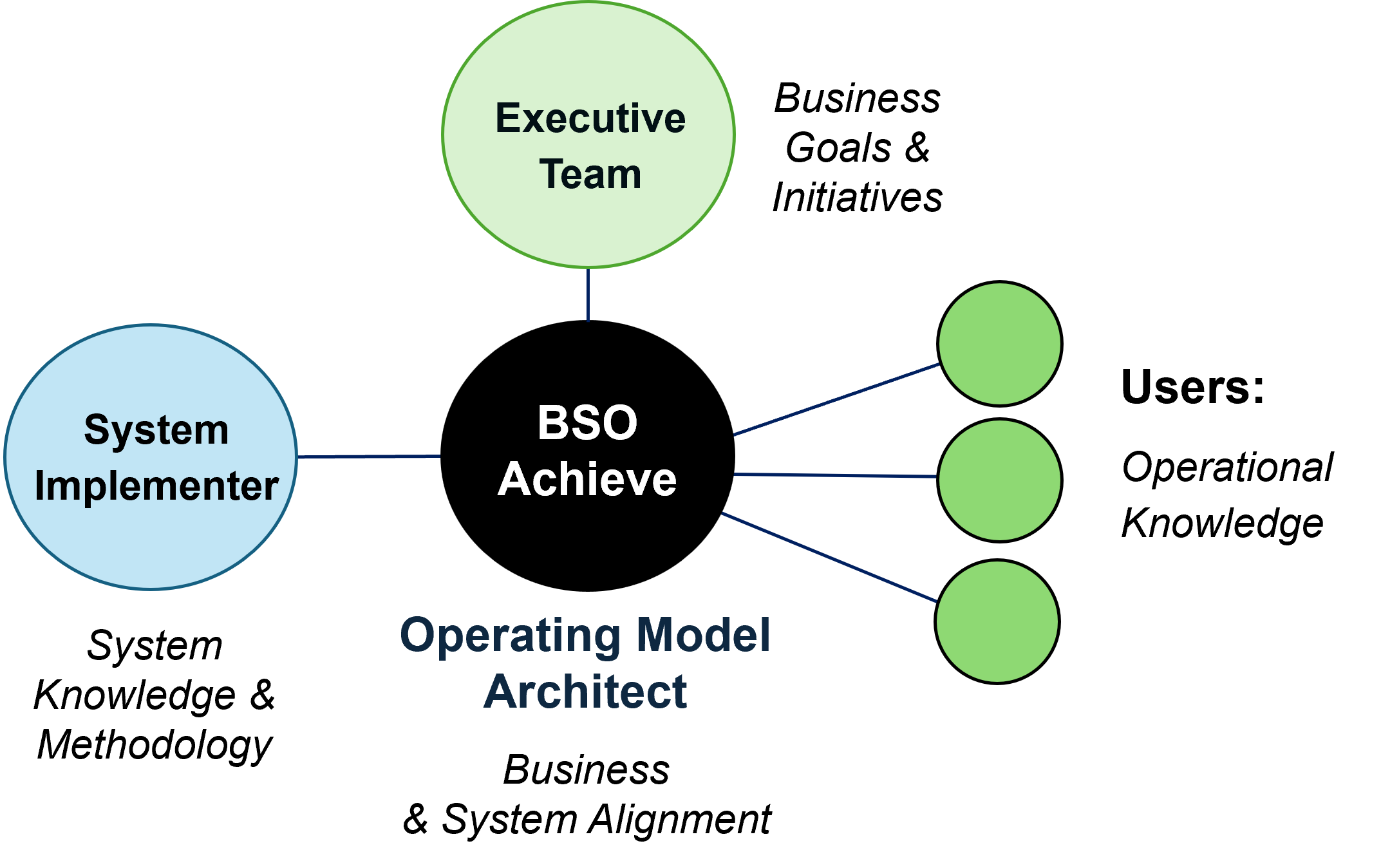
BSO Achieve Role
The traditional approach requires heavy time demands on people who are already fully booked.
BSO Achieve’s role reduces time demands and provides an integrated view of the business and system, focused on delivering business outcomes.